How do you want your future to look like?


It is impossible to eradicate conspiracy theories but we can work together and explore possibilities to live alongside them.
It is impossible to eradicate conspiracy theories but we can work together and explore possibilities to live alongside them.

Unfortunately, conspiracy theories and misinformation will never be eradicated. When there is a gap in a piece of news, people will speculate and develop theories. Nefarious actors will take the chance to capitalize on our fears and confusion and spin the speculations into something bigger and more dangerous.
However, things do not have to remain the same.
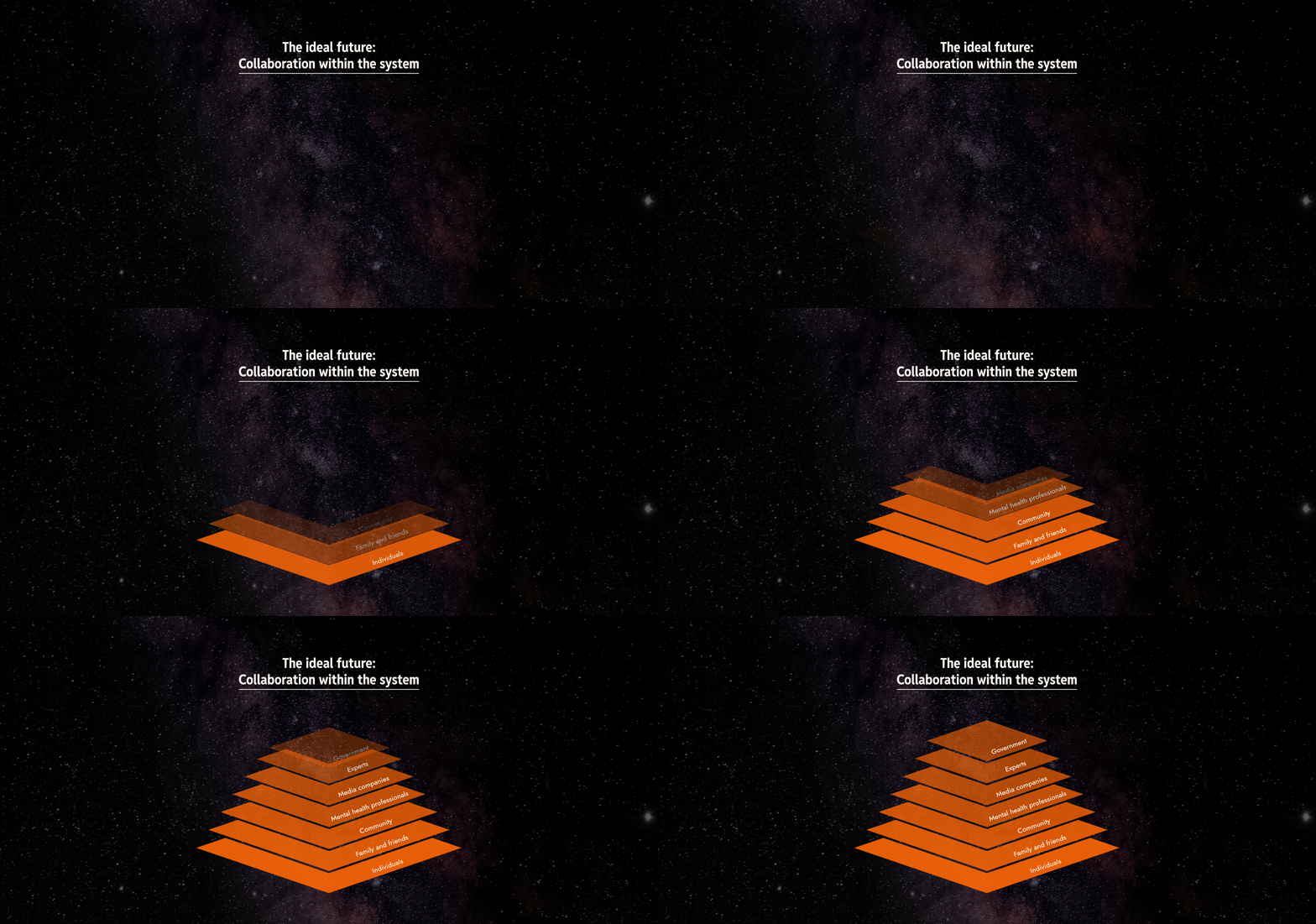
Backcasting is a method that starts with a desirable future and then works backward to identify the actions taken by different stakeholders to achieve specific goals, connecting them back to the present. Through backcasting based on existing research and findings, four areas of the ideal future are developed.
They are in no way exhaustive or perfect solutions for this wicked problem but an envisioned future of what could be possible if different parts of the system collaborate with the goal of maintaining a functioning society.
Just like language, math, and science, media literacy can be learned and it allows us to navigate the complex media landscape safely. It is important to start young as teenagers and young adults are highly impressionable by the content they consume online.
With the support of the state board of education and trustworthy teams of experts to research and develop media literacy programs, schools can successfully integrate these programs into their curriculum, reducing the burden on teachers and librarians.
Politicians need to make this their priority and we need to elect people who are concerned about this issue. Instead of waiting for bigger incidents to happen, the community needs to be vocal that a change needs to be taken for the system.
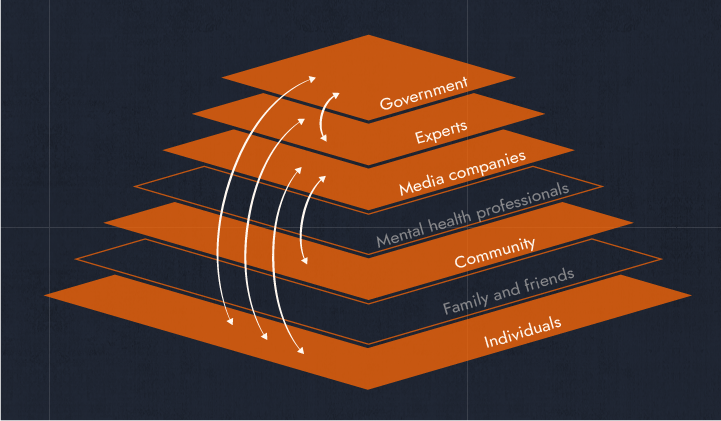
News media and social media platforms can play a huge role in educating their users to rely on credible sources and develop a habit of validating information. Journalists need to be transparent with their process and address any conflict of interest. Social media platforms can hold them accountable by highlighting the intentions and history of these news sites and social media accounts with better user interfaces.
Community involvement in moderating these platforms is crucial and they should be provided with reasonable incentives and gratifications to encourage users to be more involved. News media and social media platforms need to be less driven by profits, understand the impact they have on their readers, and act in a way that benefits society.
- Nationwide media literacy programs integrated into school curriculums
- Sustainable community involvement in moderating social media platforms
- Transparency in news reporting and accountability
- Educate yourself with the media literacy resources currently available.
- Hold each other accountable for checking the credibility of information
- Be involved in the community by highlighting misinformation and conspiracy theories when you chance upon them online
For family and friends to intervene successfully, they need to be able to notice the problem early and know where and how to seek help for the conspiracy believers and for themselves. To be able to do so, we need to understand the risk that anyone has a chance of falling down the rabbit hole.
Conspiracy theory captures the heart of those who fear the uncertainties regardless of background and educational level. Be knowledgeable about the problems of conspiracy theories and learn to pick up signs and changes in behavior. It will be too late when relationships are already broken.
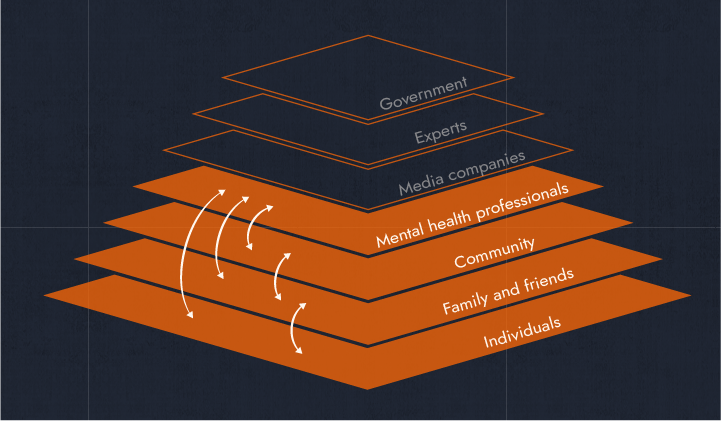
Communities provide a sense of solidarity and remind the victims they are not alone in this situation. Family members and friends experiencing the impact of conspiracy theories have set up communities online to interact, support, and provide advice to each other during these trying times.
It is important to expand these grassroots communities, providing them with funding and credibility to reach a wider audience and help more victims. Collaborating with medical professionals allows these community members to have easier access to professional help on top of community support.
- Well-established and dedicated communities for conspiracy victims
- Accessible mental health support
- Educate yourself on the issue of conspiracy theories
- Mental health professionals or grassroots communities begin to discuss the potential for collaboration
Language used in research journals can be convoluted and complicated and thus, difficult for individuals outside of the field to understand the process and findings. This gives rise to confusion and doubt, allowing conspiracy theorists to twist the facts to fit their agenda and difficult for individuals to validate the information from the source.
Having a dedicated space for communication between experts and the public where information is delivered in different formats such as videos, podcasts, and illustrations will be beneficial. Contents should be developed through the collaboration of community members knowledgeable in their expert areas to reduce the burden on experts to translate their own research and invite better communicators such as designers to conduct user research and understand the different needs.
A communication channel allows the target audience to provide feedback to the community members to help further enhance the quality of the content and directly ask expert questions and doubts they have.
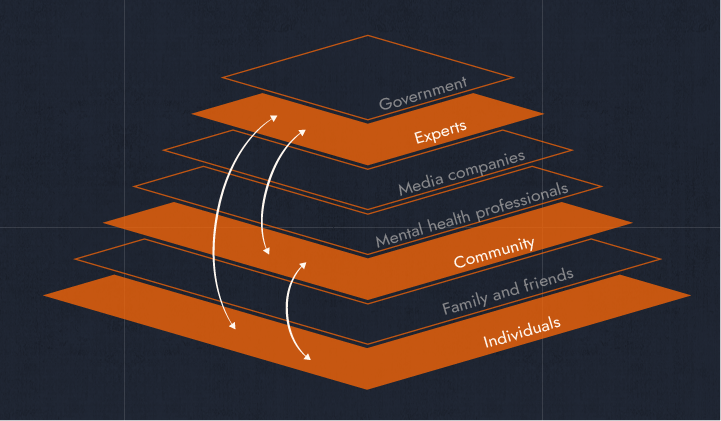
Currently, there are many engaging educational content developed by content creators on various social media platforms breaking down difficult concepts. Organizing these contents and promoting them to their respective target audience can increase the reach and gain the interest of more audiences.
- Dedicated space for educational content on complex topics for users of different age, educational level, and background
- Communication channel for individuals to directly clarify and ask an expert questions
- Greater collaboration between content creators to develop more holistic content for complex topics
The government can make a huge positive impact on media and technology companies with well-thought-out regulations to manage the spread of conspiracy theories. Rather than seeing the government as a form of restriction or media companies as dangerous, they need to be willing to collaborate closely for the benefit of society.
Not all politicians are experts in areas of social media, artificial intelligence, and communication, and thus, experts such as researchers, journalists, educators, and social scientists should be brought on board to develop regulations that are reasonable and feasible.
A blanket ban on certain technologies or platforms is not the solution but instead, focus on proactive measures rather than reactive by keeping up to date with the media landscape.
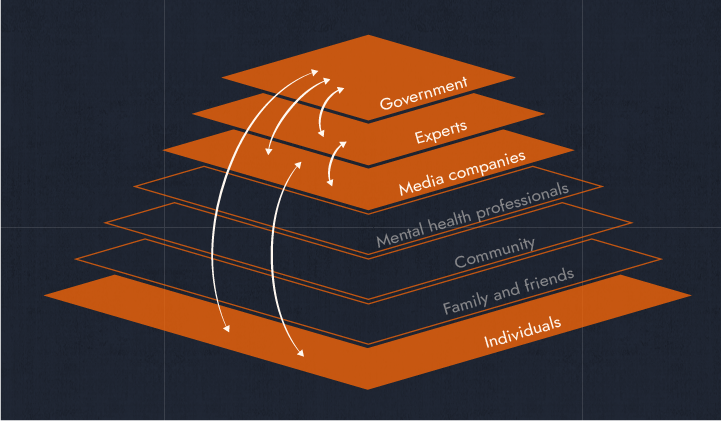
When animosity is high, it is difficult for collaboration to happen. However, the public can demand change by shifting to other social media platforms, tech companies, and news sites and boycotting those that they can no longer trust. Let us not wait till we are no longer able to differentiate facts from conspiracy theories before we take action in our own hands.
- Close collaboration between government, media and tech companies, and experts to develop regulations for the usage of social media platforms and news media
- Explore other social media platforms and aggregated news sites
- Up-and-coming media and tech companies be more proactive in discussing regulations with the government and experts